Peter Enns, Evolution, and Inerrancy: A conversational response to a recent Enns Post

A hopefully helpful response to Peter Enns’s post that opens up rather than shuts down conversation with Evangelicals who in some way affirm “biblical inerrancy.”

As someone who would own the label Evangelical, I for one like Enns’s evangelical orthodoxy scale. I attended Regent College in Vancouver, BC. Although I was a new Christian, I had already imbibed from the culture both Christian and secular (vocal anti-Christians often assume “fundamentalist” interpretation is the only Christian interpretation, Continue reading “Peter Enns, Evolution, and Inerrancy: A conversational response to a recent Enns Post”

Damn Right I’ve Got The Gospel

Sometimes, the good news is found in unexpectd places. In my own life, I first learned of redemption from the final scenes of Return of the Jedi. But when I was dragged to a church, I was told that God was nothing like the force in Star Wars. Too bad, the force is way cool (Or, epic, as my kids now say). I learned about the nature of sin and the propensity of human beings to cross the boundaries that God has set for us from Stephen King’s Pet Semetary. King’s books were forbidden in my home. So, of course, I got them from my sister. Continue reading “Damn Right I’ve Got The Gospel”

How To Read REVELATION For All Its Worth

As I write this post, in my Sunday School class, we will be finishing up our study of the The Book of Revelation. Without question, for the modern reader this book is one of the most difficult books for us to comprehend. So, below, I have compiled a list of good books that will help you read Revelation well beginning with its historical context. I list them in order of their relative difficulty. They are all linked to Amazon. So, you can read the descriptions and reviews there. Continue reading “How To Read REVELATION For All Its Worth”

Dialogue in Hamean Skepticism (Excerpt from Ham/Hume Post)

Last week, I was asked to share my thoughts on Ken Ham’s Humean Skepticism at a weekly interdisciplinary discussion group which explores the topic of God and Nature. They particularly enjoyed my imagined conversation between Ken Ham and his (fictional) son both for its humo(u)r and its illustrative power. Nothing in this post is new. So, I am keeping my promise. 😉

An Imagined Intergenerational Dialogue in mode of Hamean Skepticism

In light of Ken Ham’s beliefs about our access to knowledge of the past, I would love to be Ken Ham’s child. He needs a biblical name. Let’s call him Kenaan Ham. I can hear it, now.

Ham: Son, who broke the vase?

Kenaan: I don’t know.

Ham: It wasn’t broken when your mother and I left and you were home alone. Isn’t that your baseball?

Kenaan: Dad, there are many other possible explanations for why a vase might be broken and why my baseball might be lying in the shards. You are extrapolating based on your fallible human reason and your beliefs about the nature of boys and a belief that baseballs break vases. Have you ever seen a baseball break a vase?

Ham: Well, know I haven’t, Son. However, when I was a boy, I broke a window playing cricket.

Kenaan: Dad, a window is not a vase. All you have is shards of vase and a baseball that looks very similar to my baseball, and I may not even be the same boy that you left here this morning.

Ham: Son, did you . . .

Kenaan: Dad, let me finish. If there is one thing that you have taught me, its that the past is the past and when there is more than one possible explanation for the evidence, no matter how implausible, then we must turn from observational science to historical science. Dad, did you see me break the vase?

Ham: No, son, I didn’t.

Kenaan: Does it say anywhere in the Bible that I broke the vase?

Ham: No, son, it doesn’t.

Kenaan: Then Dad, I think we’ve learned all we can here. Let’s leave this mess for Mom to clean up. We have an Ark to build.
*******************************************************************************

The God and Nature group is open to faculty, staff, and students. We regularly have all three groups represented. The group “evolved” out a desire of a biologist at Baylor to explore the relationship of science and theology and conversations which began when I requested a good non-polemical book on evolution. He made a suggestion. What pleasantly surprised him was that I read it. In addition, to biologists, a historian of science and religion, and a physicist, we were fortunate to have a philosopher as well who teaches a course on Immanuel Kant, David Hume, & Thomas Reid which I took a few years ago. I read my blog to the the group and it generated a great deal of discussion and confirmed some possible response from different quarters. Thank you to the group for the feedback and stimulating conversation.

If you are at Baylor University and you are interested in joining us at one of our weekly conversations, by all means contact me through this blog or through my baylor e-mail. The atmosphere is informal and jovial as well as intellectually stimulating.

On Fairy Stories: J.R.R. Tolkien, Jaws, and Jeremy Wade

My recent post thanking Heidi and directing you to her blog, reminded me of the value that many modern influential Christians find in “fairy tales” and “nursery tales.” These authors include J.R.R Tolkien and his friend C.S. Lewis both of whom read G.K Chesterton and George MacDonald. In turn, these authors have been influential in my thinking and remind me to attend to my imagination. Fairy Stories take us into a world that is not and in doing so they increase our appreciation and awareness of the world that is. As Chesterton notes in Orthodoxy, we read about rivers that flow with jelly and trees that bear diamonds and then we re-discover a world in which rivers flow with fresh waters and trees bear juicy peaches and crisp apples. Continue reading “On Fairy Stories: J.R.R. Tolkien, Jaws, and Jeremy Wade”

Why [my friend] is Not Teaching This Year…and the Heresy of Ken Ham

This post will be my last post on Ken Ham for at least a week. I promise. I may still tweet one-liners, though. @panth_ian

Many of the posts on #POPChrist and on my friend Joel’s blog ‘resurrecting orthodoxy’ have been about Ken Ham and the teachings of AiG. Below, there is a link to Joel’s initial post on this topic called “Why I am Not Teaching This Year” and will give you (my wonderful readers) a better understanding of why Ham is on our minds at the moment. Continue reading “Why [my friend] is Not Teaching This Year…and the Heresy of Ken Ham”

Bluebeard: Tragic Hero or Demoniac? or What hath Copenhagen to do with the Magic Kingdom?

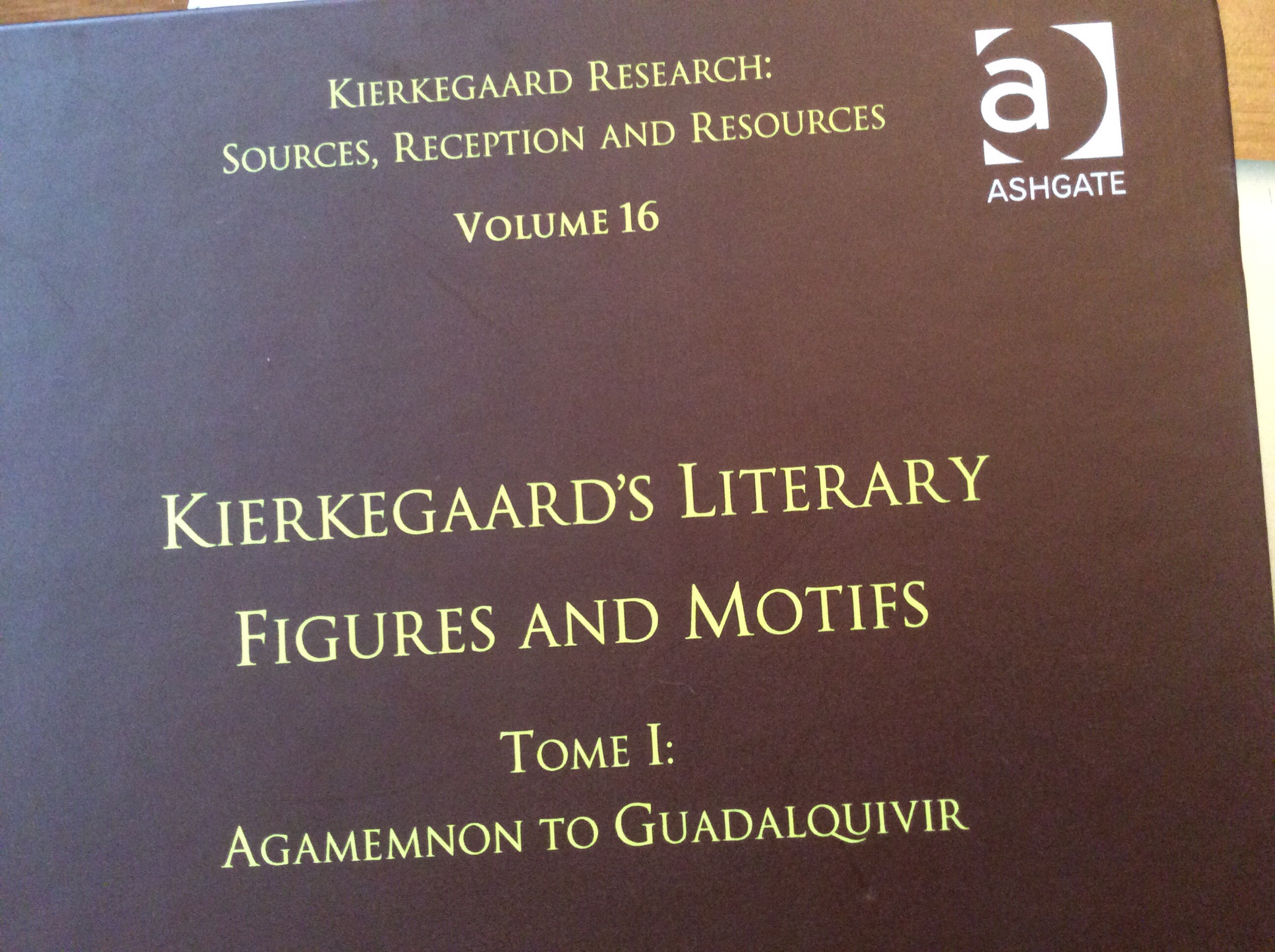
On her blog, SurLaLune Fairy Tales, Heidi Anne Heiner shared a little bit about an article I published. Kierkegaard Literary Figures & Motifs KRSRR vol 16. So, I will return the favour. If you like fairy tales, then you should visit Heidi’s blog.

Heidi’s collection Bluebeard Tales From Around the World was extremely helpful when it came time to research possible sources for Søren Kierkegaard’s Blaubart (or Bluebeard) allusions. At first, it seemed like a no brainer that of course he was dependant on the Brothers Grimm but they dropped it in their second edition after discovering its origins were, ugh, en français. C’est dommage.  Continue reading “Bluebeard: Tragic Hero or Demoniac? or What hath Copenhagen to do with the Magic Kingdom?”

Why Ham is Really Bacon, Or Irony and the Evolution of AiG’s Enlightenment Worldview

Life is filled with irony. The regular tweets and articles posted by Ken Ham and AiG are like daily receiving a box of chocolates. You have already tasted one. Should you open the box and have just one more?

In recent tweets, he has delighted me with the following tasty tidbits:

@aigkenham When a well-known Bible teacher visited the Creation Museum, he told me that the museum “exceeded his expectations.”

@panth_ian Yes, Ken, if I ever visit, I expect it will exceend mine as well. #howlowcanyougo Continue reading “Why Ham is Really Bacon, Or Irony and the Evolution of AiG’s Enlightenment Worldview”

The Heresy of Ham

The title of this post is the working title of my friend’s book on the teachings and influence of Ken Ham and Answers in Genesis (AIG). At present, the two of us are joining into the ongoing discussion about the relation of Christianity to Science. Neither of us accept the parameters of the debate as it is often defined by Young Earth Creationists (YEC) and their defacto debate partners, the so-called New Atheists (i.e. Richard Dawkins, Bill Maher, etc.). The debate as defined by the usual and very vocal participants and, therefore, as seen presented by the media and understood by the majority of the public usually presents a very stark either/or. Either the Bible (as interpreted by Ken Ham and AIG, etc.) offers a valid, historical, and scientific account of the proximate origins of the universe and therefore Christianity is true or modern scientific theories about the proximate origins of the universe (aka Big Bang and billions of years) and the origin of species (aka Evolution) is accurate and therefore theism is false. Continue reading “The Heresy of Ham”