Ken Ham’s Double Standard & the 7Ds of Deception

Or the Ark of Deception

This post is a follow-up to my recent post Ken Ham’s Ark Encounter is Fantastic! In that post, I note the Double-Standard of Answers in Genesis when it comes to depicting the Ark. They chastise illustrators of books for children for their inaccuracies (as defined by AIG) but in their own advertising and practices they do not live up to their own standards.

A Tweet brought another Ken Ham approved message on the dangers that lurk between the covers and frequently on the covers of children’s books and Bibles. In a post on the ArkEncouter.com, Ham reveals that the Ark Encounter will dedicate a whole wall to “Fairy Tale Arks” and the 7Ds of Deception. Next thing you know, he will be insisting that David wasn’t really an Asparagus and Goliath was not a Giant Pickle.

Click Here for “What is a Fairy-Tale Ark and Why Is It Dangerous?

Tantalizingly, Ken Ham only reveals three of the 7Ds of Deception in this post. I can’t wait to visit the Ark Encounter and find out the other four. At $40 a ticket, that’s only $10 per D. A bargain by any post-diluvian standard.

So, what are the first three Ds of Deception? Continue reading “Ken Ham’s Double Standard & the 7Ds of Deception”

Ken Ham’s Ark Encounter is Fantastic!

Or Truth in Children’s Books but not in Advertising.

As opening day (July 7th) approaches, Ken Ham and Answers in Genesis ratchet up the advertising for their life-sized construction of Ken Ham’s construal of Noah’s Ark. Yet, as blogger and biologist Joel Duff noted on his blog Naturalis Historia, the billboards are somewhat misleading as to what you will see in Ken Ham’s Ark.

See: Joel Duff’s New Ad for Ark Encounter Contradicts Ken Ham’s Understanding of Biblical “Kinds”

The billboards depict familiar animals. The animals that you and your family can go to see at your local zoo. However, on Ken Ham’s Ark, you will only find fantastic creatures that are the imaginary constructions of Ken Ham’s creature shop.

That’s right. Apart from a petting zoo, the creatures in Ken Ham’s Ark will be totally fantastic. That is the creatures are entirely made up. Continue reading “Ken Ham’s Ark Encounter is Fantastic!”

Book Review: Peter Enns’s The Sin of Certainty

Peter Enns. The Sin of Certainty: Why God Desires Our Trust More Than Our “Correct” Beliefs. New York, NY: HarperOne, 2016. (230 pages, including notes and index)

Now available at Amazon and your local Christian bookstore (hopefully).

I couldn’t put this book down — twice. I read Peter Enns’s The Sin of Certainty a few weeks ago with the intention of writing my review the next day. Of course, life does not always go according to plan. So, the other day, I picked the book up again just to look for some pithy quotes before I began writing but before I knew it I was back into this book in the way one normally gets engrossed in a good novel.

Peter Enns writes with an engaging style that makes the challenging ideas accessible to the average reader, even those who do not normally read non-fiction.

A Faith Journey:

I think what drew me into the argument of this book is the personal and autobiographical narrative that is woven throughout and gives shape to the text. In The Sin of Certainty, the reader is taken on a journey. The journey is from faith to faith.

That might not sound very exciting. If I begin to walk out my front door and my child asks me where I am going, then it might sound odd if I respond, “I’m going home.” Yet, Pilgrim’s Progess, The Chronicles of Narnia, and The Hobbit or There and Back Again by Bilbo Baggins are all stories about leaving home and returning home.

Now, I am not suggesting that The Sin of Certainty is in the same league as these works. Still, I think that Enns tells a story that will be all too familiar to many North American Evangelical Christians. I say all too familiar because this book is for the secret and not so secret doubters that live among us and worship alongside us.

On the one hand, this book is for those who are either afraid to ask questions (or sometimes even have questions) for fear of being considered substandard Christians and those who wittingly or unwittingly asked questions that resulted in hurtful reactions and broken relationships. In telling his story and confronting what he calls “the sin of certainty”, Enns may be giving voice to many Christians who are afraid to ask questions, express doubt, and challenge presuppositions for fear of being censured, losing their jobs, losing their community, or, indeed, having their salvation questioned by other Christians.

To these, Enns is saying, you are not alone and historically the Church has been a place where one can have doubts, ask questions, and reform one’s faith. Doubts and questions are not the antithesis of faith but can be a proving ground for enriching your faith. Continue reading “Book Review: Peter Enns’s The Sin of Certainty”

Dispensationalism, Dividing the Word, Dividing Walls and all on Flat Earth

A Mystery:

How does a 21st Century Norwegian become a King James Only, Dispensationalist, Not Merely Young Earth but FLAT-EARTH Creationist?

A Living Riddle:

To @aigkenham @CreationMuseum Outer space does not exist, Ken. We live under the firmament on a flat earth which is still. You should know.

When I first saw this Tweet chastising Answers in Genesis’s Ken Ham, I thought it was a jest. The type of jest I might make to emphasize the limits of literalism and to note that every literalist stops being a literalist somewhere. Or do they?flat-earth

I doubt there are many young earth creationists who adopt a biblical biological perspective when it comes to human conception or medicine. If they did, their doctors would prescribe heart medicine for mental disorders and fertility doctors would treat women only and treat the discovery of ova like AIG treats the discovery of background radiation in space and carbon dating.

Out of curiousity, I replied to this tweet and asked, Do you really believe the earth is flat? The individual responded with “Of course I belive the earth is flat that is what the Bible teaches.” I had found someone who was at once more consistent and more of curiousity than Ken Ham.
Continue reading “Dispensationalism, Dividing the Word, Dividing Walls and all on Flat Earth”

How Ken Ham & Answers in Genesis Led Me to Accept Evolutionary Theory

Ken Ham and the folks at Answers in Genesis (AIG) often suggest that what leads people, including biblical scholars, to propose interpretations of the early chapters of Genesis that differ from a “literal” interpretation of Genesis akin to AIG‘s own is a desire to conform their understanding of Scripture (and doctrine) to modern scientific theories, i.e. “deep time”, the Big Bang, and, of course, the theory of evolution. In other words, the suggestion is that beliefs about evolution and the age of the universe not only precede but drive Christians to seek alternate interpretations of the early chapters of Genesis that better accommodate modern scientific theories.

The polemical and apologetic narrative usually sounds something like the following from a 2011 post condemning the work of Wheaton College professor John Walton:

Why are we seeing more and more bizarre and elitist ideas (e.g., William Dembski—see previous blog post for details) coming out of Christian academia? I believe it is a form of academic pride, largely from academic peer pressure, because these people ultimately “loved the praise of men more than the praise of God” (John 12:43).

Continue reading “How Ken Ham & Answers in Genesis Led Me to Accept Evolutionary Theory”

Four-Legged Insects and the Genesis Flood

Source: Four-Legged Insects and the Genesis Flood Follow this link to my Baylor blog Christianity and Creation. From time to time, I will post science related articles on Christianity and Creation.

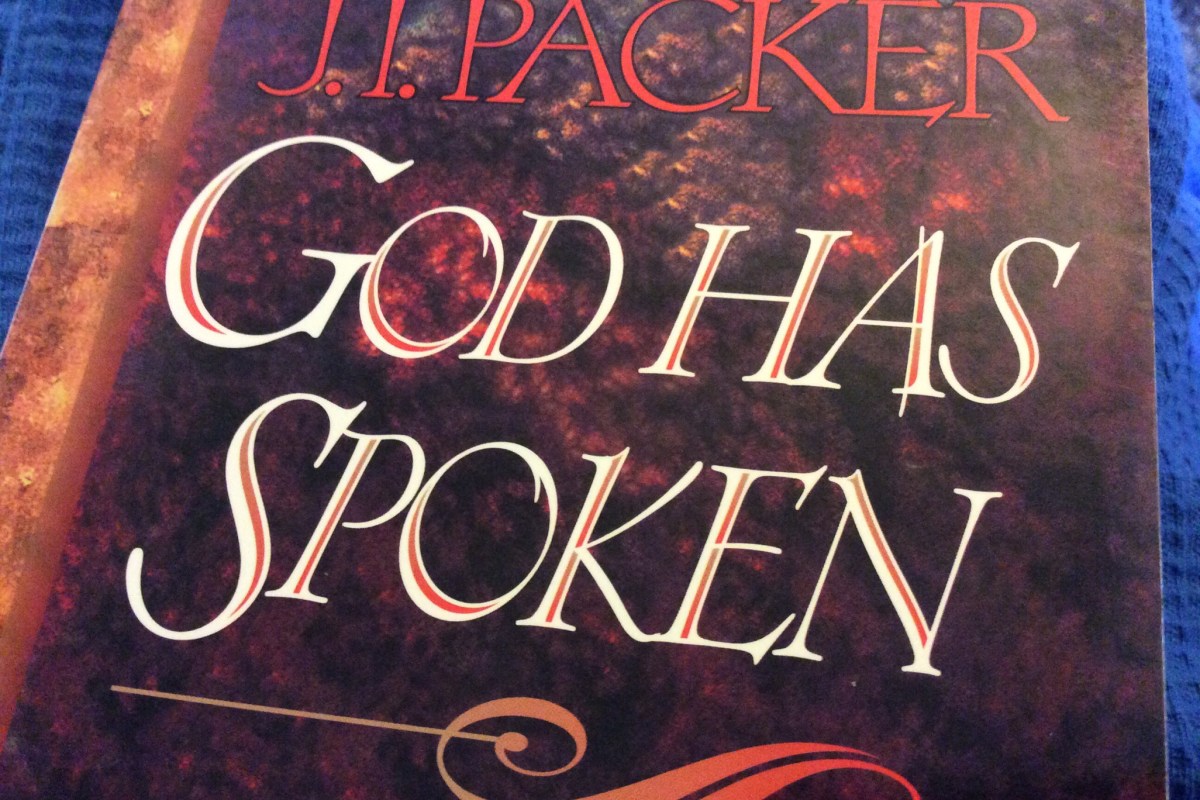
God Has Spoken 2: Reflections on J.I. Packer’s Book

“Some modern theologians say, ‘God doesn’t speak.’ Well, He says, He does.”

J.I. Packer from Lecture at Regent College

God Has Spoken: Revelation and the Bible 3rd Edition

Chapter Two: The Lost Word

Apparently, although I have not scientifically verified it, there is more than one way to skin a cat. Likewise there is more than one way to lose the Word of God.

Losing the Word

In the second chapter of God Has Spoken, Packer draws an analogy between the famine of the Word announced by the prophet Amos to the people of the Northern Kingdom in the eighth century BC and his contemporary situation. That is, while Creator God spoke to the people through the prophets to His people, there came a time when a refusal by the people (especially those with power) to listen to God resulted in God answering with silence. If you won’t listen, then I will stop speaking or I will make you deaf.

Christians have always affirmed the authority of the Bible. The earliest Christians affirmed the authority of the Law, the Prophets, and the Writings which Christ and the apostles read as witnessing to the character, covenant and promises of the God of Israel and to Jesus Christ as the fulfillment of those promises and climax of those covenants. At the same time, particular texts written by the apostles and their close associates were used in much the same way. These are commonly referred to as the Old and New Testaments, respectively. Continue reading “God Has Spoken 2: Reflections on J.I. Packer’s Book”

God Has Spoken 1: Reflections on J.I. Packer’s Book

“Theology is for doxology.” J.I. Packer

As I find myself in the middle of a conversation that is dominated by Evangelistic Atheists (EAs) on the one hand and the heirs (wittingly or unwittingly) of American Fundamentalism on the other hand, I find myself disagreeing with both sides with respect to how they frame the debate and on their assumptions about the nature of Christianity. I have described their almost symbiotic relationship in a series of posts entitled  An Unhappy Marriage.

As one who grew up reading and watching Carl Sagan and other modern scientific apologists, I too imbibed a particular views of Christianity especially with respect to the nature of revelation and of the Christian Scriptures aka the Bible. I accepted their understanding of the nature of Scripture and of Biblical Revelation. This view was reinforced by some Christian relatives, televangelists, and pop-culture in general. For instance, my grandfather was into End-Times charts and, as far as I know, I was the only one of his grandchildren that enjoyed these theological conversations. Like Carl Sagan, I was much more into extra-terrestrials but was fascinated by people’s beliefs in and the idea of supernatural beings as well.

For the most part, those who engage in evolution vs. creationism or science vs. Christianity debate seem to share similar views on the nature of Scripture. Obviously, atheists reject that any text ought to be authoritative in the way Christians hold the Bible to be authoritative but many atheists tend to grant that people like Ken Ham and other heirs of American Fundamentalism are normative with respect to how Christians do and ought to read Scripture. Continue reading “God Has Spoken 1: Reflections on J.I. Packer’s Book”

Advent, Christmas and the Nativity Part IV: Jesus, Why Don’t Your Disciples Wash Their Hands? Were You Born in a Barn?

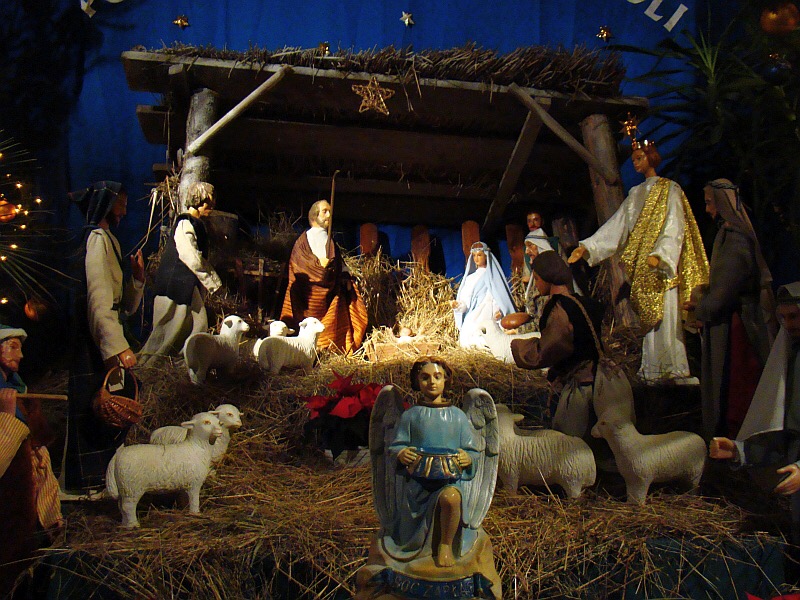
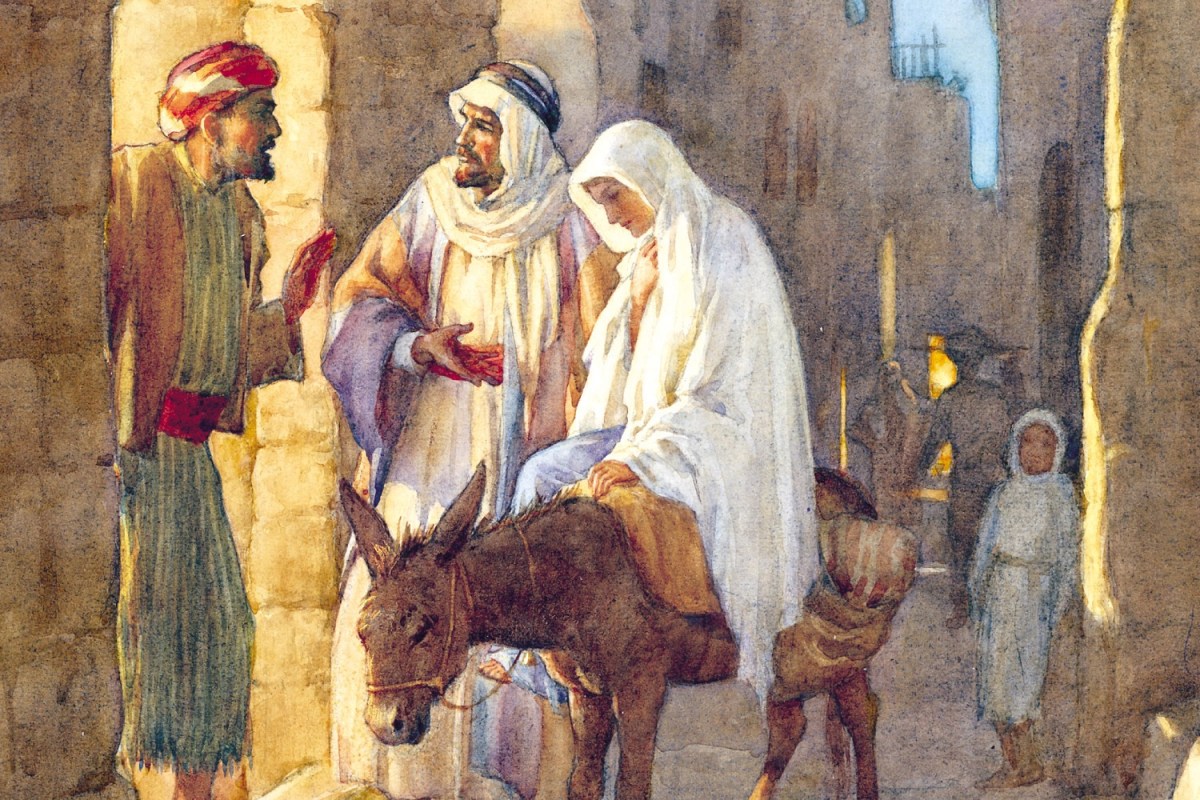
The popular version of the Christmas story has a full-term Mary riding into Bethlehem on a donkey. When Mary and Joseph arrive in town, they are told that the local inn is full and must settle for a nearby barn for shelter. That very night, Mary gave birth to her firstborn son, Jesus. She wrapped him in swaddling clothes and laid him in a manger.

IMG_0143

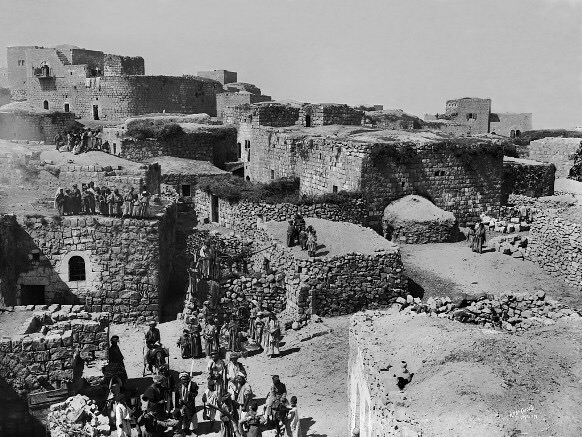
In Part III, I addressed the problem that there is no “inn” in Luke’s narrative. The word that is translated inn is more accurately translated “guest room”. The idea of the inn likely comes from the British imagination which is also the likely source of the assumption that the manger must be located in a barn. In a way, it is a bit surprising that a Pub never worked its way into the popular narrative. And after Jesus was born, Joseph went to the local pub and handed out cigars. (The New Cockney Version) No, maybe not. Continue reading “Advent, Christmas and the Nativity Part IV: Jesus, Why Don’t Your Disciples Wash Their Hands? Were You Born in a Barn?”

Advent, Christmas, and Nativity Part III: Because there was no room in the . . . Hey, where’s the Inn?

In the previous post in this Advent series, I suggested that Mary was not likely full-term on the 70 mile journey from Nazareth to Bethlehem. So, she was a lighter load for the little donkey that may or may not have made the journey with them. I have also saved Joseph, the patron Saint of Canada, from any accusations of being so insensitive as to make his full-term wife ride a donkey.

It is possible that Mary rode a donkey to Bethlehem.But depending on how far along she was in her pregnancy, she may have even have walked at leisure alongside her husband. Is that such a bad picture to have leading up to the Nativity? These newlyweds strolling along the path to Bethlehem, enjoying one another’s company, and talking about plans for the future. Maybe Joseph was filling his wife in on the quirks of his family in Bethlehem. Continue reading “Advent, Christmas, and Nativity Part III: Because there was no room in the . . . Hey, where’s the Inn?”