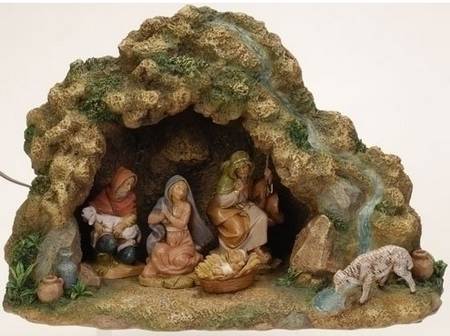
Advent, Christmas & the Nativity: Immanuel, God With Us, Is that good news?

Merry Christmas!

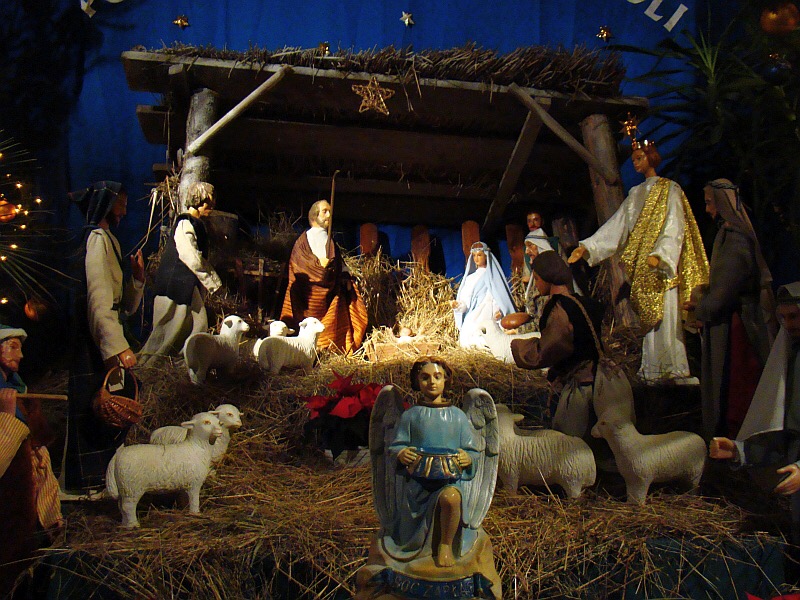
In Matthew’s Gospel, he states that the birth of Jesus fulfills Isaiah 7:14.

Joseph, son of David, do not fear to take Mary as your wife, for that which is conceived in her is from the Holy Spirit. She will bear a son, and you shall call his name Jesus, for he will save his people from their sins.” 22 All this took place to fulfill what the Lord had spoken by the prophet:
“Behold, the virgin shall conceive and bear a son,
and they shall call his name Immanuel” (which means, God with us). Matthew 1:20-23

Fulfillment in Matthew:

Matthew employs the phrase “this was to fulfill” a number of times in his gospel before citing a passage from the Old Testament. While his fulfillment language can sometimes refer to a rather direct prediction, like the Messiah being born in Bethlehem, the city of David, this prediction/fulfillment scenario does not exhaust the phrase.

The phrase is better understood as meaning something more like “this (event) brings to completion” or “this (event) is the fullest expression of”. As far as we can tell, no Jews were expecting the Messiah or Messsiah(s) to be born of a virgin. Continue reading “Advent, Christmas & the Nativity: Immanuel, God With Us, Is that good news?”


Advent, Christmas and the Nativity Part VI: Strange Women or Xenophobia & Genealogy 

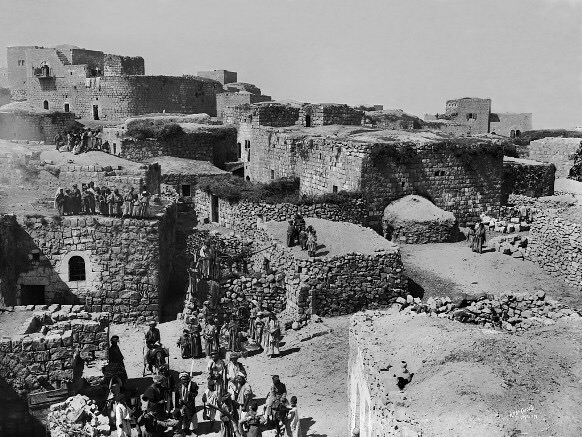
While those of you who have read my previous posts are scrambling to put together a model of a first century Bethlehemite home complete with guest room and attached stable, I am departing slightly from the Nativity scene itself as I turn to Matthew’s genealogy which precedes his passing reference to Jesus’s birth in Bethlehem.

In his genealogy of Joseph’s line, Matthew includes references to four women from Abrahamic/Davidic line. They are Tamar, Rahab, Ruth, and the wife of Uriah (or Bathsheba, the mother of Solomon).

Why does Matthew mention these women at the beginning of his gospel? As with most good storytelling, there is no single right answer to this question. That is, I think Matthew likely had multiple reasons for highlighting these women at the beginning of his gospel. In this post, I have no intention of being exhaustive because that would be exhausting.

Who is Tamar? Continue reading “Advent, Christmas and the Nativity Part VI: Strange Women or Xenophobia & Genealogy “

Advent, Christmas, and Nativity Part V: Road Trip!

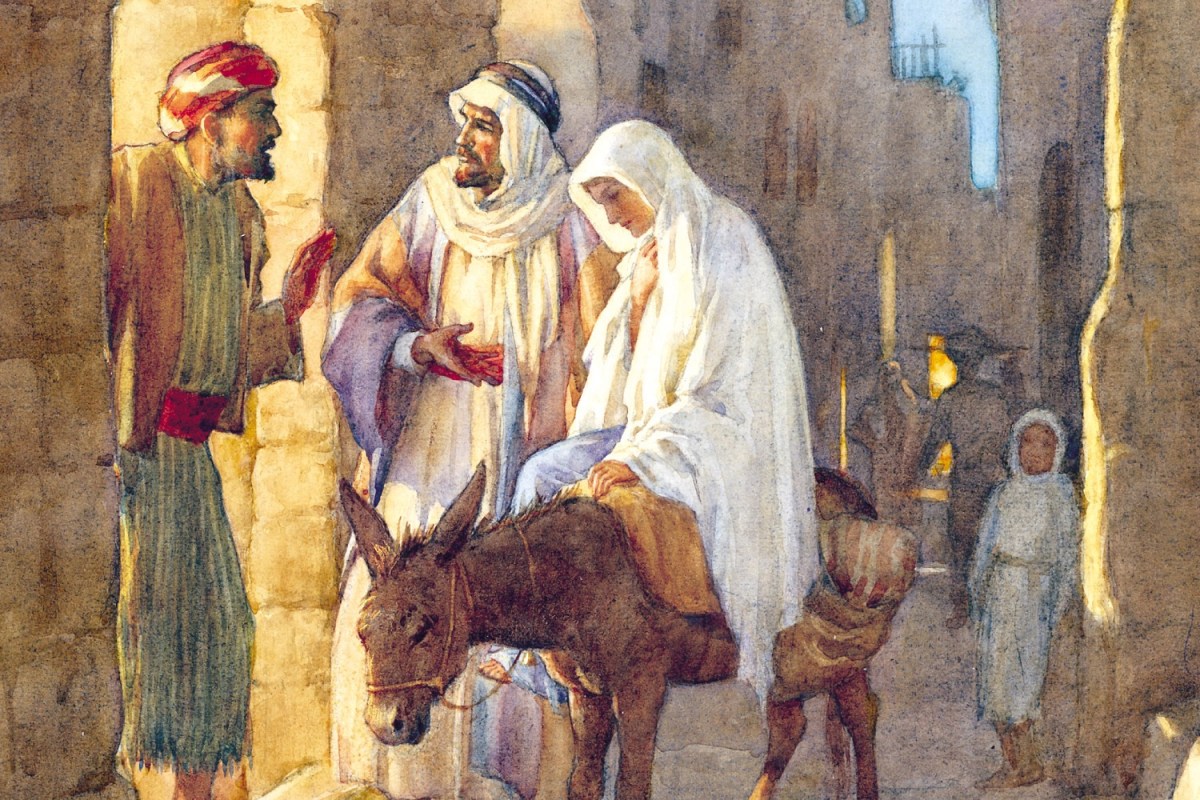
In an earlier post, I suggested that Joseph and Mary likely stayed with relatives in Bethlehem. The house they stayed in was full. When the baby arrived, there was no room for them in the guest room. So, they laid the baby in the manger. Why was the house so full? Continue reading “Advent, Christmas, and Nativity Part V: Road Trip!”

Star Wars: The Spirit Awakens — A Letter to Preachers and Apologists

Rest assured, this post contains no Force Awakens spoilers. I haven’t seen it yet. It does contain spoilers for episodes I-III. So, if you are Amish, you may not want to read this post.

The Star Wars films shaped my childhood imagination. They nurtured in me a sense of right and wrong. They gave me a meaningful vocabulary for good and evil. Lucas’s images of the light side and the dark side opened my eyes to a battle being waged daily in the world that I could see on the evening news, in the playground, and even in my own heart and mind. This imaginative world gave me a sense of responsiblity and the hope that I could overcome the darkness within in me, that I could choose. Eventually, these films gave me my first glimpse of grace and redemption.

Yet, the Christians in my life missed this opportunity to speak to me and who knows how many others. They failed to speak to me in my language. They failed to translate the Gospel, to use my vocabulary. They did not see the Spirit of Christ already at work. The Spirit went before them like the pillar of fire in the darkness. But all they could say to me was “The Spirit of God is not like the force in Star Wars.

My family did not attend church regularly. Nevertheless, it seems like every time I entered a church for the next decade or so. I was told that God was not like the force in Star Wars. In the instant they got my attention, they lost it. If your god, is not like the force in Star Wars, then that’s too bad for your god. The force is awesome! Continue reading “Star Wars: The Spirit Awakens — A Letter to Preachers and Apologists”

Advent, Christmas and the Nativity Part IV: Jesus, Why Don’t Your Disciples Wash Their Hands? Were You Born in a Barn?

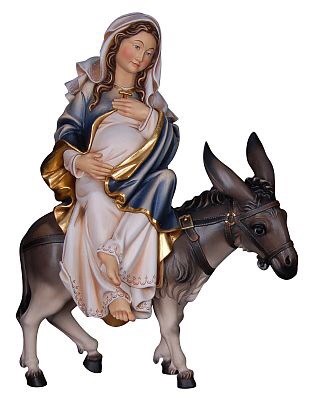
The popular version of the Christmas story has a full-term Mary riding into Bethlehem on a donkey. When Mary and Joseph arrive in town, they are told that the local inn is full and must settle for a nearby barn for shelter. That very night, Mary gave birth to her firstborn son, Jesus. She wrapped him in swaddling clothes and laid him in a manger.

IMG_0143

In Part III, I addressed the problem that there is no “inn” in Luke’s narrative. The word that is translated inn is more accurately translated “guest room”. The idea of the inn likely comes from the British imagination which is also the likely source of the assumption that the manger must be located in a barn. In a way, it is a bit surprising that a Pub never worked its way into the popular narrative. And after Jesus was born, Joseph went to the local pub and handed out cigars. (The New Cockney Version) No, maybe not. Continue reading “Advent, Christmas and the Nativity Part IV: Jesus, Why Don’t Your Disciples Wash Their Hands? Were You Born in a Barn?”

Advent, Christmas, and Nativity Part III: Because there was no room in the . . . Hey, where’s the Inn?

In the previous post in this Advent series, I suggested that Mary was not likely full-term on the 70 mile journey from Nazareth to Bethlehem. So, she was a lighter load for the little donkey that may or may not have made the journey with them. I have also saved Joseph, the patron Saint of Canada, from any accusations of being so insensitive as to make his full-term wife ride a donkey.

It is possible that Mary rode a donkey to Bethlehem.But depending on how far along she was in her pregnancy, she may have even have walked at leisure alongside her husband. Is that such a bad picture to have leading up to the Nativity? These newlyweds strolling along the path to Bethlehem, enjoying one another’s company, and talking about plans for the future. Maybe Joseph was filling his wife in on the quirks of his family in Bethlehem. Continue reading “Advent, Christmas, and Nativity Part III: Because there was no room in the . . . Hey, where’s the Inn?”

Advent, Christmas, and Nativity Part II: Just How Round Was Yon Virgin?

Last time, I took away the Donkey from your Nativity set. But I put it back.

I promise that I won’t take Mary away. Rather, in the Spirit of Christmas, I seek only to relieve a bit of the Donkey’s burden, to make his pilgrimage to Bethlehem a little lighter. In the process, I also hope to raise the status of Joseph in the eyes of every woman who has been “great with child”. Maybe, just maybe, he did not make his labouring wife ride a donkey for 70 miles.

Was Mary Nine Months Pregnant on the Journey to Bethlehem?

Let’s go through the same process we used in the last post, shall we?

What says, Luke? Continue reading “Advent, Christmas, and Nativity Part II: Just How Round Was Yon Virgin?”

Advent, Christmas, and the Nativity Part I: No Room on the Donkey or Is Joseph an Ass?

Spoiler Alert: If you have not heard the Christmas Story before, this post may give away some surprise elements like Jesus was born in Bethlehem. Oops.

Spoilers of Another Kind: If you want to hold onto some of the traditional features of the nativity, then you may want to avoid this series of Advent posts. My intent is not to ruin Christmas. These posts are not intended to be my own version of Adam Ruins Everything.

So, Mary Rode a Little Donkey before She had a Little Lamb

Now, already with just the title of this post, you likely have a story in your head but how much of this story is actually in the Bible. If it is not there, then where did these extra-biblical elements come from.image
Our sources for the story of the Jesus’s birth and the events leading up to it are found in the Gospels of Matthew and Luke. Mark and John do not include nativity stories. Now, the story we tell is already a harmonized version of these two narratives. There is no real problem with telling a harmonized version of these stories at Christmas time. At least, there is no problem so long as we do not lose sight of the two distinct narratives that are in our canon. Continue reading “Advent, Christmas, and the Nativity Part I: No Room on the Donkey or Is Joseph an Ass?”

Consider the Ant!? Answers in Genesis suggests Invertebrates May Not Be Alive in the “Biblical Sense” or Whaaaat the Sheol?!?!

I can’t make this stuff up. Okay, I could. But I don’t have to because Answers in Genesis has a whole staff of writers who make this stuff up.

In order to defend AiG’s assertion that death only entered the world when ha’adam ate the fruit from the tree of knowledge of good and evil and following a typical AiG strategy, Avery Foley suggests that ants and other insects are not living things[1],

Aside from the possibility that ants, and other insects, are not even alive in the biblical sense . . .

What does “not even alive in the biblical sense” even mean, is it like “knowing someone in the biblical sense”? “Alas, poor Yorick, I knew him well.”[2] Nudge, nudge, wink, wink.[3] Well, under the veneer of real research, AiG often includes footnotes [of course, footnote 1 is the only footnote but surely this indicates that this “scientifically” or “biblically” grounded article must have data to back up such a bold and paradigm shifting claim], let’s scroll down, shall we? Continue reading “Consider the Ant!? Answers in Genesis suggests Invertebrates May Not Be Alive in the “Biblical Sense” or Whaaaat the Sheol?!?!”

Ham-Handed Hermeneutics VII: On The 7th Post the Blogger Reflected

The History of Two Hermeneutical Errors:

Harmonization and Concordism

The claim of Ken Ham and AiG that most of the Church Fathers taught a version of YEC similar to the teachings of Answers in Genesis motivated me to write this series of posts. Yet, responding to this patently false assertion by the folks at AiG was never the sole motivation. I have long had an interest in theology, science, and the history of ideas. An interest that pre-dates my own conversion to Christianity. While I am doubtful that I could ever write as enduring a spiritual autobiography as those provided by Augustine, G.K. Chesterton, or John Henry Newman, I resonate with the life filled with questions the telos of which was and remains Christianity or Orthodoxy.

Even as Spirit-filled Christians, we never have a full grasp of the truth. Indeed, while Christianity tells us of our dignity and value as human beings, it also reminds us of our finitude, our lack of control, our limitations, even, or, perhaps, especially, with respect to our knowledge of the Creator. Most of us have been warned about “putting God in a box” but at one time or another every Christian likely tries to get the Creator in his or her power rather than submitting to the Creator.

So, as I review what I have seen so far in the few Church Fathers that I have inexhaustively explored, I keep in mind that as brilliant as these men, they too are limited. Indeed, they frequently admit their own limitations and errors. Remember, Augustine’s autobiographical work is entitled Confessions and later he wrote a work entitled Retractions. This historical observation leads me to my first comment about AiG’s use of the historical data. Continue reading “Ham-Handed Hermeneutics VII: On The 7th Post the Blogger Reflected”