God Has Spoken 2: Reflections on J.I. Packer’s Book

“Some modern theologians say, ‘God doesn’t speak.’ Well, He says, He does.”

J.I. Packer from Lecture at Regent College

God Has Spoken: Revelation and the Bible 3rd Edition

Chapter Two: The Lost Word

Apparently, although I have not scientifically verified it, there is more than one way to skin a cat. Likewise there is more than one way to lose the Word of God.

Losing the Word

In the second chapter of God Has Spoken, Packer draws an analogy between the famine of the Word announced by the prophet Amos to the people of the Northern Kingdom in the eighth century BC and his contemporary situation. That is, while Creator God spoke to the people through the prophets to His people, there came a time when a refusal by the people (especially those with power) to listen to God resulted in God answering with silence. If you won’t listen, then I will stop speaking or I will make you deaf.

Christians have always affirmed the authority of the Bible. The earliest Christians affirmed the authority of the Law, the Prophets, and the Writings which Christ and the apostles read as witnessing to the character, covenant and promises of the God of Israel and to Jesus Christ as the fulfillment of those promises and climax of those covenants. At the same time, particular texts written by the apostles and their close associates were used in much the same way. These are commonly referred to as the Old and New Testaments, respectively. Continue reading “God Has Spoken 2: Reflections on J.I. Packer’s Book”

God Has Spoken 1: Reflections on J.I. Packer’s Book

“Theology is for doxology.” J.I. Packer

As I find myself in the middle of a conversation that is dominated by Evangelistic Atheists (EAs) on the one hand and the heirs (wittingly or unwittingly) of American Fundamentalism on the other hand, I find myself disagreeing with both sides with respect to how they frame the debate and on their assumptions about the nature of Christianity. I have described their almost symbiotic relationship in a series of posts entitled  An Unhappy Marriage.

As one who grew up reading and watching Carl Sagan and other modern scientific apologists, I too imbibed a particular views of Christianity especially with respect to the nature of revelation and of the Christian Scriptures aka the Bible. I accepted their understanding of the nature of Scripture and of Biblical Revelation. This view was reinforced by some Christian relatives, televangelists, and pop-culture in general. For instance, my grandfather was into End-Times charts and, as far as I know, I was the only one of his grandchildren that enjoyed these theological conversations. Like Carl Sagan, I was much more into extra-terrestrials but was fascinated by people’s beliefs in and the idea of supernatural beings as well.

For the most part, those who engage in evolution vs. creationism or science vs. Christianity debate seem to share similar views on the nature of Scripture. Obviously, atheists reject that any text ought to be authoritative in the way Christians hold the Bible to be authoritative but many atheists tend to grant that people like Ken Ham and other heirs of American Fundamentalism are normative with respect to how Christians do and ought to read Scripture. Continue reading “God Has Spoken 1: Reflections on J.I. Packer’s Book”

Credulous Skeptics & Mythical Memes 1: Jesus Did not Exist

Credulous Skeptics and Mythical Memes 1: “Jesus Did not Exist”

In this series, I question the veracity of and logic behind some of the popular memes employed by Evangelistic Atheists (EAs) and self-proclaimed skeptics in their supposed war on ignorance. For the most part, I seek minimal claims and suggest an appeal to agnosticism or caution on the part of self-proclaimed skeptics. That is, I simply  ask skeptics to be consistently skeptical by being skeptical with respect to some of the extreme claims that seem to support their generally anti-theistic tendencies. Yet, these extreme claims often undermine their credibility and raise questions about their status as bona fide skeptics. Continue reading “Credulous Skeptics & Mythical Memes 1: Jesus Did not Exist”

Advent, Christmas & the Nativity: Immanuel, God With Us, Is that good news?

Merry Christmas!

In Matthew’s Gospel, he states that the birth of Jesus fulfills Isaiah 7:14.

Joseph, son of David, do not fear to take Mary as your wife, for that which is conceived in her is from the Holy Spirit. She will bear a son, and you shall call his name Jesus, for he will save his people from their sins.” 22 All this took place to fulfill what the Lord had spoken by the prophet:
“Behold, the virgin shall conceive and bear a son,
and they shall call his name Immanuel” (which means, God with us). Matthew 1:20-23

Fulfillment in Matthew:

Matthew employs the phrase “this was to fulfill” a number of times in his gospel before citing a passage from the Old Testament. While his fulfillment language can sometimes refer to a rather direct prediction, like the Messiah being born in Bethlehem, the city of David, this prediction/fulfillment scenario does not exhaust the phrase.

The phrase is better understood as meaning something more like “this (event) brings to completion” or “this (event) is the fullest expression of”. As far as we can tell, no Jews were expecting the Messiah or Messsiah(s) to be born of a virgin. Continue reading “Advent, Christmas & the Nativity: Immanuel, God With Us, Is that good news?”

Advent, Christmas and the Nativity Part VI: Strange Women or Xenophobia & Genealogy 

While those of you who have read my previous posts are scrambling to put together a model of a first century Bethlehemite home complete with guest room and attached stable, I am departing slightly from the Nativity scene itself as I turn to Matthew’s genealogy which precedes his passing reference to Jesus’s birth in Bethlehem.

In his genealogy of Joseph’s line, Matthew includes references to four women from Abrahamic/Davidic line. They are Tamar, Rahab, Ruth, and the wife of Uriah (or Bathsheba, the mother of Solomon).

Why does Matthew mention these women at the beginning of his gospel? As with most good storytelling, there is no single right answer to this question. That is, I think Matthew likely had multiple reasons for highlighting these women at the beginning of his gospel. In this post, I have no intention of being exhaustive because that would be exhausting.

Who is Tamar? Continue reading “Advent, Christmas and the Nativity Part VI: Strange Women or Xenophobia & Genealogy “

Advent, Christmas, and Nativity Part V: Road Trip!

In an earlier post, I suggested that Joseph and Mary likely stayed with relatives in Bethlehem. The house they stayed in was full. When the baby arrived, there was no room for them in the guest room. So, they laid the baby in the manger. Why was the house so full? Continue reading “Advent, Christmas, and Nativity Part V: Road Trip!”

Star Wars: The Spirit Awakens — A Letter to Preachers and Apologists

Rest assured, this post contains no Force Awakens spoilers. I haven’t seen it yet. It does contain spoilers for episodes I-III. So, if you are Amish, you may not want to read this post.

The Star Wars films shaped my childhood imagination. They nurtured in me a sense of right and wrong. They gave me a meaningful vocabulary for good and evil. Lucas’s images of the light side and the dark side opened my eyes to a battle being waged daily in the world that I could see on the evening news, in the playground, and even in my own heart and mind. This imaginative world gave me a sense of responsiblity and the hope that I could overcome the darkness within in me, that I could choose. Eventually, these films gave me my first glimpse of grace and redemption.

Yet, the Christians in my life missed this opportunity to speak to me and who knows how many others. They failed to speak to me in my language. They failed to translate the Gospel, to use my vocabulary. They did not see the Spirit of Christ already at work. The Spirit went before them like the pillar of fire in the darkness. But all they could say to me was “The Spirit of God is not like the force in Star Wars.

My family did not attend church regularly. Nevertheless, it seems like every time I entered a church for the next decade or so. I was told that God was not like the force in Star Wars. In the instant they got my attention, they lost it. If your god, is not like the force in Star Wars, then that’s too bad for your god. The force is awesome! Continue reading “Star Wars: The Spirit Awakens — A Letter to Preachers and Apologists”

Advent, Christmas and the Nativity Part IV: Jesus, Why Don’t Your Disciples Wash Their Hands? Were You Born in a Barn?

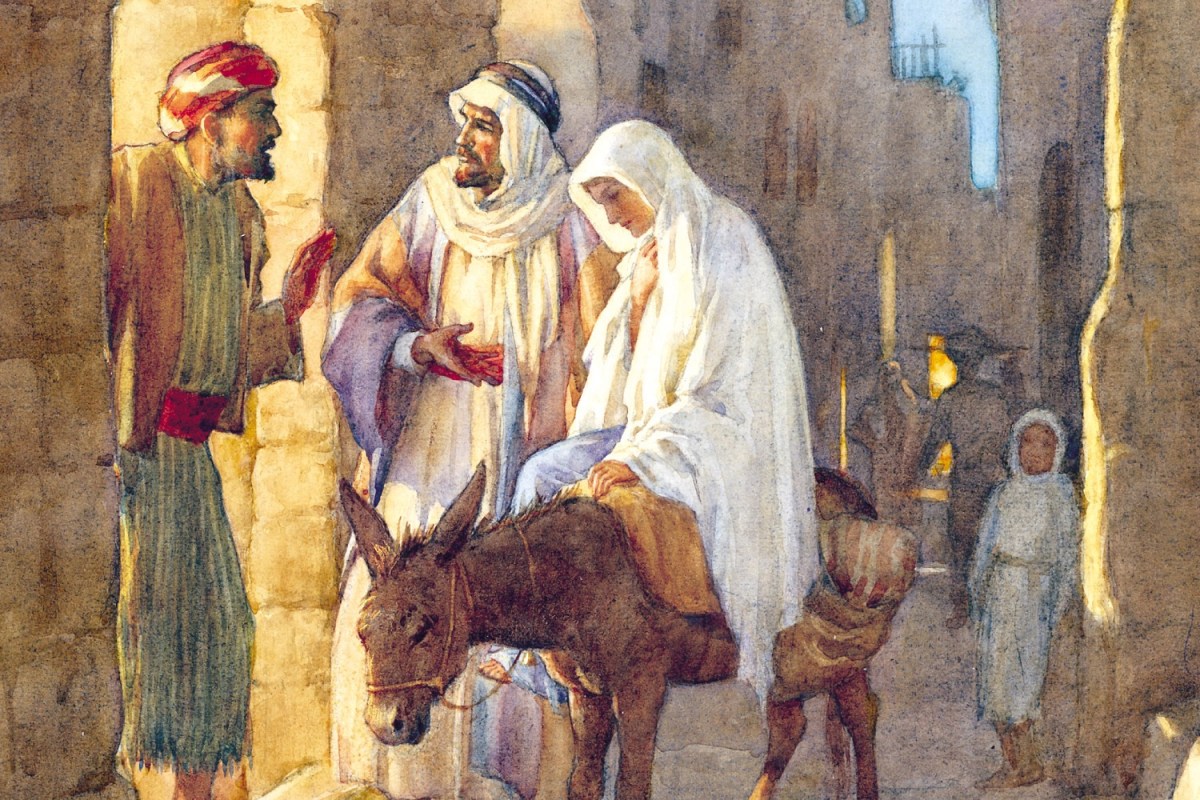
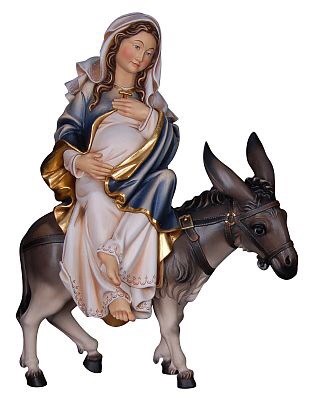
The popular version of the Christmas story has a full-term Mary riding into Bethlehem on a donkey. When Mary and Joseph arrive in town, they are told that the local inn is full and must settle for a nearby barn for shelter. That very night, Mary gave birth to her firstborn son, Jesus. She wrapped him in swaddling clothes and laid him in a manger.

IMG_0143

In Part III, I addressed the problem that there is no “inn” in Luke’s narrative. The word that is translated inn is more accurately translated “guest room”. The idea of the inn likely comes from the British imagination which is also the likely source of the assumption that the manger must be located in a barn. In a way, it is a bit surprising that a Pub never worked its way into the popular narrative. And after Jesus was born, Joseph went to the local pub and handed out cigars. (The New Cockney Version) No, maybe not. Continue reading “Advent, Christmas and the Nativity Part IV: Jesus, Why Don’t Your Disciples Wash Their Hands? Were You Born in a Barn?”

Advent, Christmas, and Nativity Part III: Because there was no room in the . . . Hey, where’s the Inn?

In the previous post in this Advent series, I suggested that Mary was not likely full-term on the 70 mile journey from Nazareth to Bethlehem. So, she was a lighter load for the little donkey that may or may not have made the journey with them. I have also saved Joseph, the patron Saint of Canada, from any accusations of being so insensitive as to make his full-term wife ride a donkey.

It is possible that Mary rode a donkey to Bethlehem.But depending on how far along she was in her pregnancy, she may have even have walked at leisure alongside her husband. Is that such a bad picture to have leading up to the Nativity? These newlyweds strolling along the path to Bethlehem, enjoying one another’s company, and talking about plans for the future. Maybe Joseph was filling his wife in on the quirks of his family in Bethlehem. Continue reading “Advent, Christmas, and Nativity Part III: Because there was no room in the . . . Hey, where’s the Inn?”

Advent, Christmas, and Nativity Part II: Just How Round Was Yon Virgin?

Last time, I took away the Donkey from your Nativity set. But I put it back.

I promise that I won’t take Mary away. Rather, in the Spirit of Christmas, I seek only to relieve a bit of the Donkey’s burden, to make his pilgrimage to Bethlehem a little lighter. In the process, I also hope to raise the status of Joseph in the eyes of every woman who has been “great with child”. Maybe, just maybe, he did not make his labouring wife ride a donkey for 70 miles.

Was Mary Nine Months Pregnant on the Journey to Bethlehem?

Let’s go through the same process we used in the last post, shall we?

What says, Luke? Continue reading “Advent, Christmas, and Nativity Part II: Just How Round Was Yon Virgin?”