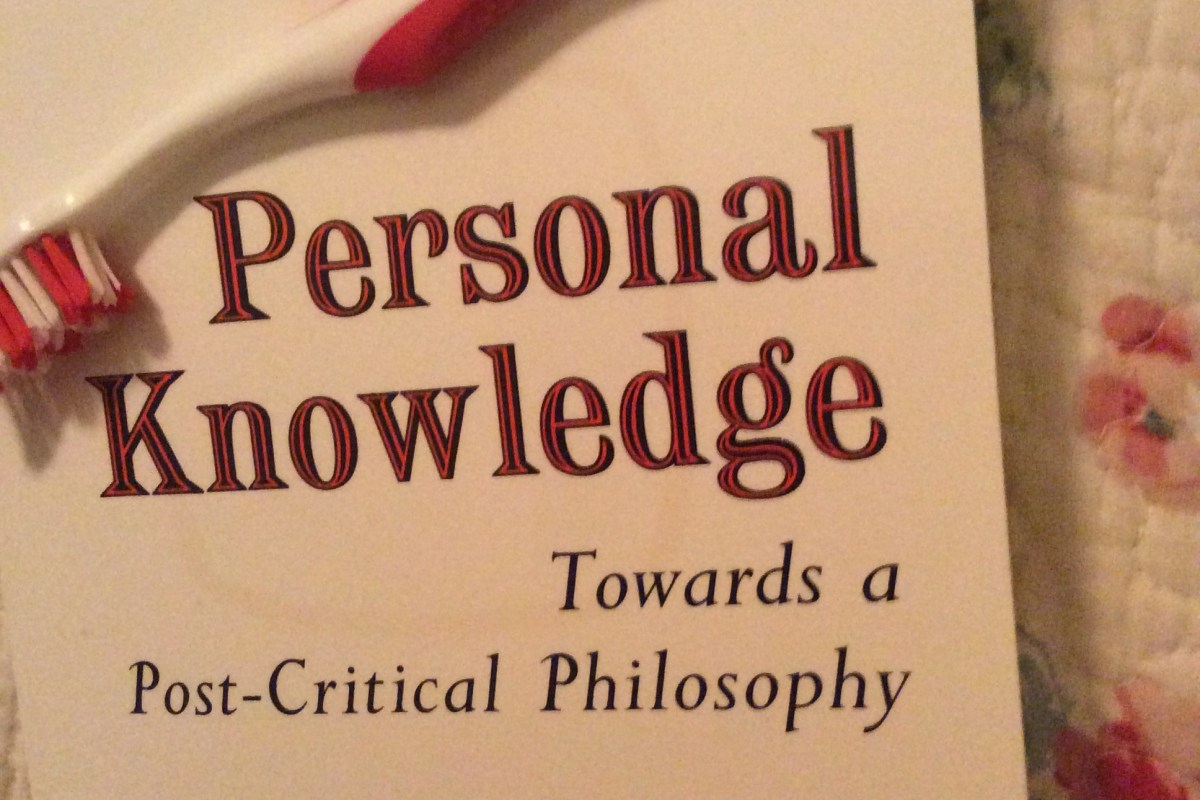
Michael Polanyi’s Personal Knowledge: Toward a Post-Critical Philosophy: A Teaser Trailer of sorts
The Hungarian born, Michael Polanyi (1891-1976) was a polymath, nominated thrice (yes, I used thrice) for the Nobel Prize, once for his contribution in physics and twice in chemistry. While for much of his academic career, he was a professor of chemistry, he eventually took a chair in social studies.
With his turn to social studies, he began to write and lecture on knowledge (or epistemology), especially as it relates to the scientific disciplines. Wikipedia offers a helpful and concise summary of Polanyi’s concerns and the alternative for which he argues,
In his book Science, Faith and Society (1946), Polanyi set out his opposition to a positivist account of science, noting that it ignores the role personal commitments play in the practice of science. Polanyi was invited to give the prestigious Gifford Lectures in 1951-2 at Aberdeen. A revised version of his lectures were later published as Personal Knowledge (1958). In this book Polanyi claims that all knowledge claims (including those that derive from rules) rely on personal judgements. He denies that a scientific method can yield truth mechanically. All knowing, no matter how formalised, relies upon commitments. Polanyi argued that the assumptions that underlie critical philosophy are not only false, they undermine the commitments that motivate our highest achievements. He advocates a fiduciary post-critical approach, in which we recognise that we believe more than we can prove, and more than we can say. Wikipedia Michael Polanyi 12/01/2015 bold added
In my interdisciplinary, internet and, dare I say, interfaith conversations, I find that those who give the scientific method a special status in their epistemology and claim to know things objectively through the use of this method, rarely demonstrate any evidence that they have critically examined their own commitments to the method and their presuppositions about epistemology. So, I often mention Michael Polanyi who speaks from within the scientific community and yet challenges some of the common presuppositions. Continue reading “An Objective Look at Personal Knowledge or Trust Me I Read This Book Using the Scientific Method”








 #POPChrist