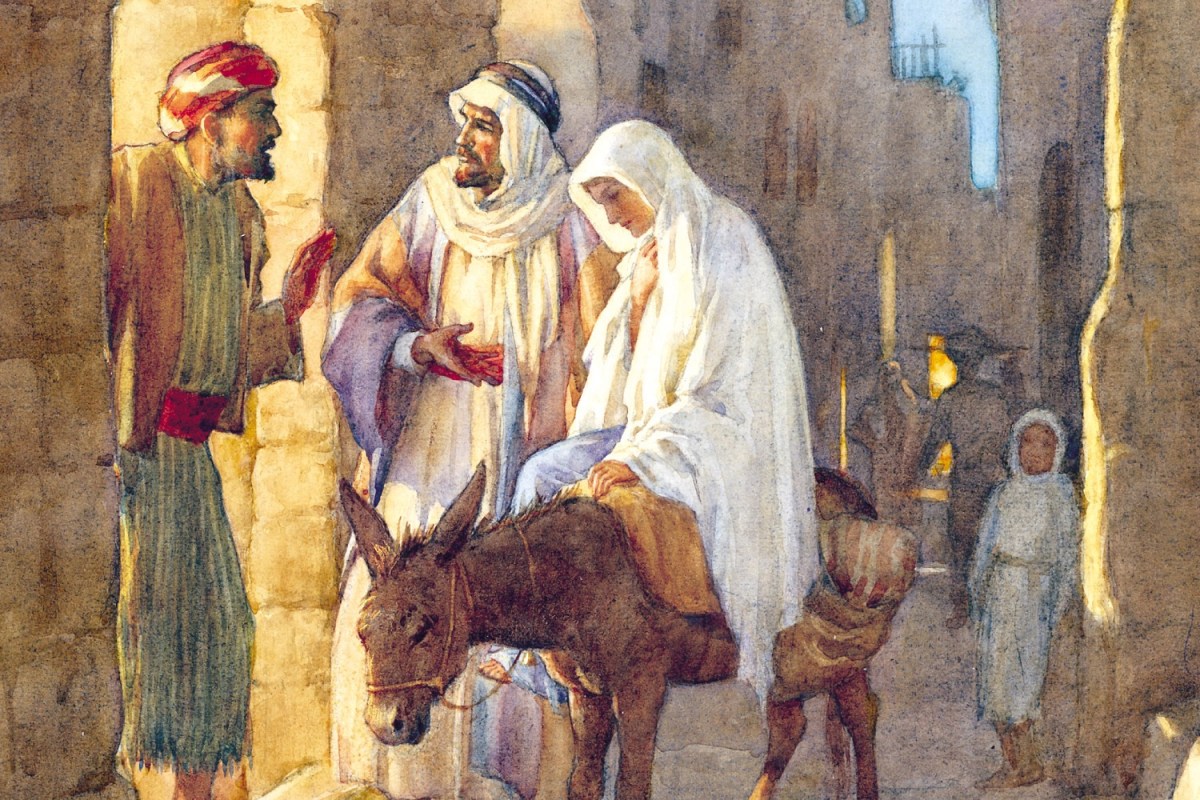
Advent, Christmas, and Nativity Part III: Because there was no room in the . . . Hey, where’s the Inn?

In the previous post in this Advent series, I suggested that Mary was not likely full-term on the 70 mile journey from Nazareth to Bethlehem. So, she was a lighter load for the little donkey that may or may not have made the journey with them. I have also saved Joseph, the patron Saint of Canada, from any accusations of being so insensitive as to make his full-term wife ride a donkey.

It is possible that Mary rode a donkey to Bethlehem.But depending on how far along she was in her pregnancy, she may have even have walked at leisure alongside her husband. Is that such a bad picture to have leading up to the Nativity? These newlyweds strolling along the path to Bethlehem, enjoying one another’s company, and talking about plans for the future. Maybe Joseph was filling his wife in on the quirks of his family in Bethlehem. Continue reading “Advent, Christmas, and Nativity Part III: Because there was no room in the . . . Hey, where’s the Inn?”


Advent, Christmas, and Nativity Part II: Just How Round Was Yon Virgin?

Last time, I took away the Donkey from your Nativity set. But I put it back.

I promise that I won’t take Mary away. Rather, in the Spirit of Christmas, I seek only to relieve a bit of the Donkey’s burden, to make his pilgrimage to Bethlehem a little lighter. In the process, I also hope to raise the status of Joseph in the eyes of every woman who has been “great with child”. Maybe, just maybe, he did not make his labouring wife ride a donkey for 70 miles.

Was Mary Nine Months Pregnant on the Journey to Bethlehem?

Let’s go through the same process we used in the last post, shall we?

What says, Luke? Continue reading “Advent, Christmas, and Nativity Part II: Just How Round Was Yon Virgin?”

Advent, Christmas, and the Nativity Part I: No Room on the Donkey or Is Joseph an Ass?

Spoiler Alert: If you have not heard the Christmas Story before, this post may give away some surprise elements like Jesus was born in Bethlehem. Oops.

Spoilers of Another Kind: If you want to hold onto some of the traditional features of the nativity, then you may want to avoid this series of Advent posts. My intent is not to ruin Christmas. These posts are not intended to be my own version of Adam Ruins Everything.

So, Mary Rode a Little Donkey before She had a Little Lamb

Now, already with just the title of this post, you likely have a story in your head but how much of this story is actually in the Bible. If it is not there, then where did these extra-biblical elements come from.image
Our sources for the story of the Jesus’s birth and the events leading up to it are found in the Gospels of Matthew and Luke. Mark and John do not include nativity stories. Now, the story we tell is already a harmonized version of these two narratives. There is no real problem with telling a harmonized version of these stories at Christmas time. At least, there is no problem so long as we do not lose sight of the two distinct narratives that are in our canon. Continue reading “Advent, Christmas, and the Nativity Part I: No Room on the Donkey or Is Joseph an Ass?”

Ham-Handed Hermeneutics VII: On The 7th Post the Blogger Reflected

The History of Two Hermeneutical Errors:

Harmonization and Concordism

The claim of Ken Ham and AiG that most of the Church Fathers taught a version of YEC similar to the teachings of Answers in Genesis motivated me to write this series of posts. Yet, responding to this patently false assertion by the folks at AiG was never the sole motivation. I have long had an interest in theology, science, and the history of ideas. An interest that pre-dates my own conversion to Christianity. While I am doubtful that I could ever write as enduring a spiritual autobiography as those provided by Augustine, G.K. Chesterton, or John Henry Newman, I resonate with the life filled with questions the telos of which was and remains Christianity or Orthodoxy.

Even as Spirit-filled Christians, we never have a full grasp of the truth. Indeed, while Christianity tells us of our dignity and value as human beings, it also reminds us of our finitude, our lack of control, our limitations, even, or, perhaps, especially, with respect to our knowledge of the Creator. Most of us have been warned about “putting God in a box” but at one time or another every Christian likely tries to get the Creator in his or her power rather than submitting to the Creator.

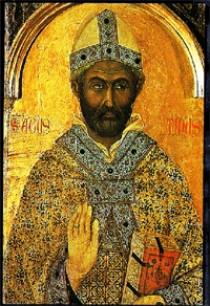
So, as I review what I have seen so far in the few Church Fathers that I have inexhaustively explored, I keep in mind that as brilliant as these men, they too are limited. Indeed, they frequently admit their own limitations and errors. Remember, Augustine’s autobiographical work is entitled Confessions and later he wrote a work entitled Retractions. This historical observation leads me to my first comment about AiG’s use of the historical data. Continue reading “Ham-Handed Hermeneutics VII: On The 7th Post the Blogger Reflected”

An Objective Look at Personal Knowledge or Trust Me I Read This Book Using the Scientific Method

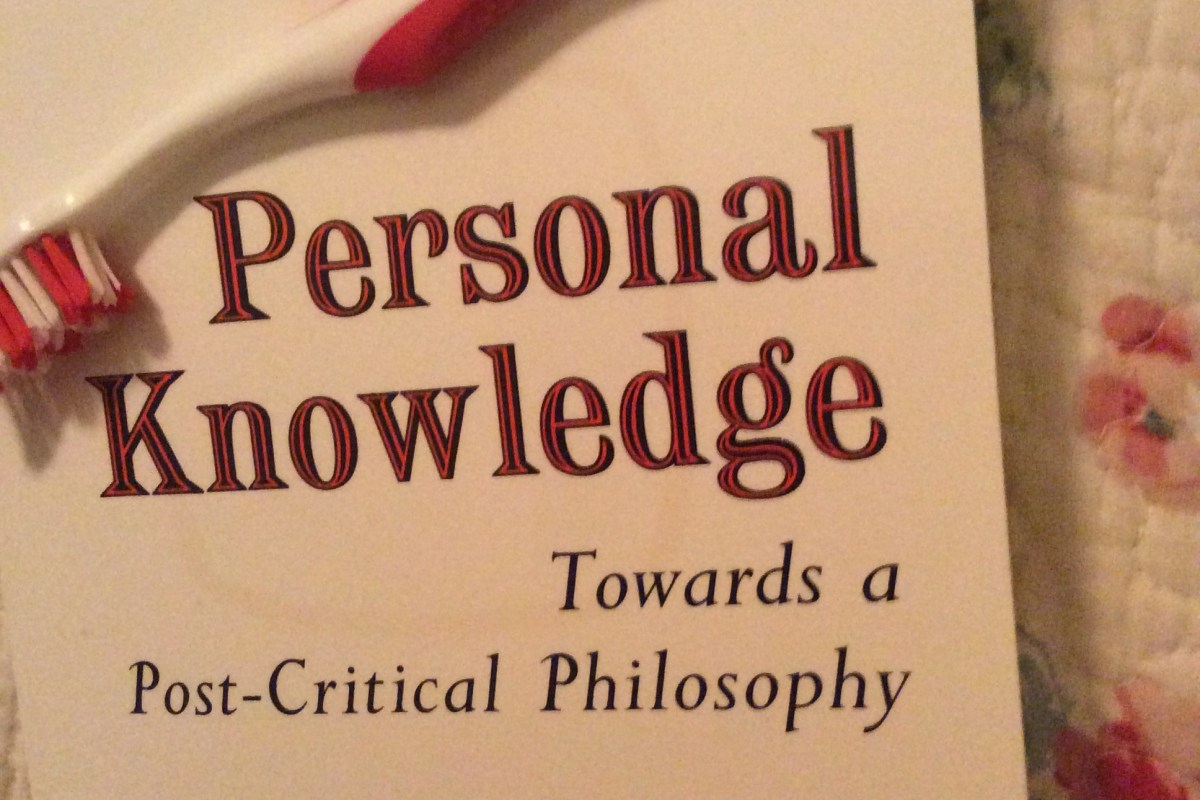
Michael Polanyi’s Personal Knowledge: Toward a Post-Critical Philosophy: A Teaser Trailer of sorts

The Hungarian born, Michael Polanyi (1891-1976) was a polymath, nominated thrice (yes, I used thrice) for the Nobel Prize, once for his contribution in physics and twice in chemistry. While for much of his academic career, he was a professor of chemistry, he eventually took a chair in social studies.
With his turn to social studies, he began to write and lecture on knowledge (or epistemology), especially as it relates to the scientific disciplines. Wikipedia offers a helpful and concise summary of Polanyi’s concerns and the alternative for which he argues,

In his book Science, Faith and Society (1946), Polanyi set out his opposition to a positivist account of science, noting that it ignores the role personal commitments play in the practice of science. Polanyi was invited to give the prestigious Gifford Lectures in 1951-2 at Aberdeen. A revised version of his lectures were later published as Personal Knowledge (1958). In this book Polanyi claims that all knowledge claims (including those that derive from rules) rely on personal judgements. He denies that a scientific method can yield truth mechanically. All knowing, no matter how formalised, relies upon commitments. Polanyi argued that the assumptions that underlie critical philosophy are not only false, they undermine the commitments that motivate our highest achievements. He advocates a fiduciary post-critical approach, in which we recognise that we believe more than we can prove, and more than we can say. Wikipedia Michael Polanyi 12/01/2015 bold added

In my interdisciplinary, internet and, dare I say, interfaith conversations, I find that those who give the scientific method a special status in their epistemology and claim to know things objectively through the use of this method, rarely demonstrate any evidence that they have critically examined their own commitments to the method and their presuppositions about epistemology. So, I often mention Michael Polanyi who speaks from within the scientific community and yet challenges some of the common presuppositions. Continue reading “An Objective Look at Personal Knowledge or Trust Me I Read This Book Using the Scientific Method”

Ham-Handed Hermeneutics VI: More Hippo, Less Ham

Ian W Panth's avatar#POPChrist

Or the Harmonization Temptation

This post continues and concludes (for now) my engagement with Augustine’s On the Literal Meaning of Genesis.
I simply want to note some of the intriguing and insightful elements in this work. I will give particular attention to Augustine’s suggestion that Genesis 1 presents God’s causal creation of all things, including human beings, while Genesis 2 describes the formal or material creation of human beings which for Augustine is God’s ongoing creative activity. Finally, I suggest that one of the errors that is common to Ham, Augustine and many errors is the desire to harmonize Genesis 1 and Genesis 2.

[For related Ham-Handed posts follow these links:Augustine I,Augustine II, Augustine III)

View original post 2,192 more words

Ham-Handed Hermeneutics VI: More Hippo, Less Ham

Or the Harmonization Temptation

This post continues and concludes (for now) my engagement with Augustine’s On the Literal Meaning of Genesis.
I simply want to note some of the intriguing and insightful elements in this work. I will give particular attention to Augustine’s suggestion that Genesis 1 presents God’s causal creation of all things, including human beings, while Genesis 2 describes the formal or material creation of human beings which for Augustine is God’s ongoing creative activity. Finally, I suggest that one of the errors that is common to Ham, Augustine and many errors is the desire to harmonize Genesis 1 and Genesis 2.

[For related Ham-Handed posts follow these links: Augustine IAugustine II, Augustine III)

Continue reading “Ham-Handed Hermeneutics VI: More Hippo, Less Ham”

Humanity was not made for Scripture but Scripture for Humanity

Following from the idea of sola scriptura (scripture alone), many Christians, primarily those coming out of the Protestant traditions, have come to think that if people will just read the Bible they will become followers of Christ. That is, they seem to suggest that acceptance of the Bible as an authoritative text for life precedes acceptance of Christ Jesus as Lord and Savio(u)r.

In convincing the world of this basic though generally erroneous assumption, we Protestants have unfortunately been quite successful. I am reminded of this through my recent interactions with non-Christians of various kinds.

To witness our success, take some time to listen to how non-Christians portray Christianity. For a moment, you might see yourself as in a mirror, it may be a funhouse mirror but it is a mirror, nonetheless.

When you do take time to listen, to ask questions, to create space for your neighbo(u)r to give voice to their ideas, frustrations, fears, dreams, desires, and concerns, I think you will hear what I hear quite consistently. That is, in the distortions of the funhouse mirror, this view of the authority of Scripture is an accurate reflection of what they hear from Christians. Continue reading “Humanity was not made for Scripture but Scripture for Humanity”

What Motivates N.T. Wright? Well, Why not Ask Him? So, I Did.

A Brief Interview with N.T. Wright

As I was writing my previous post, What Motivates Ken Ham? or What AiG Gets Wrong about N.T. Wright, I thought to myself maybe I should just ask Dr. Wright myself.

I wonder if the folks at Answers in Genesis have thought of this radical off the wall approach to dialogue. Do the writers at AiG consider actually engaging in conversation with the scholars that they so readily judge and condemn? I have it on good authority that Wright and other scholars do receive mail from Young Earthers, hate mail, that is.

In my view, scholarship is engaging in an ongoing conversation. Conversation requires listening and responding. Moreover, as the word itself suggests true conversation allows for the possibility of conversion. That is, when one enters into a conversation it is possible that you or your conversation partner may have a change of mind. (see “The Discipline of Study” in Richard Foster’s The Celebration of Discipline) In Academics, this dialogue is often carried out by reading one another’s writings and seriously engaging with and responding to each other’s arguments and thoughts.

Now, I have met Wright a few times at Regent College and at Society of Biblical Literature meetings. He likely does not remember me but we do have some mutual friends who could vouch for me. So, I re-introduced myself and asked him the following questions:

1. What motivates you to engage the Academy?

2. What motivated you to accept the theory of evolution (if indeed you have)? Continue reading “What Motivates N.T. Wright? Well, Why not Ask Him? So, I Did.”

What Motivates Ken Ham? or What Answers in Genesis gets Wrong about N.T. Wright

A common tactic of Ken Ham and Answers in Genesis (AiG) is to attack fellow Christians and accuse them of being “compromised Christians.” In the process, if they don’t outright misrepresent these men and women (mostly men), then they most certainly under represent their significant and valuable contributions to the Church and yes, even to, the Academy.

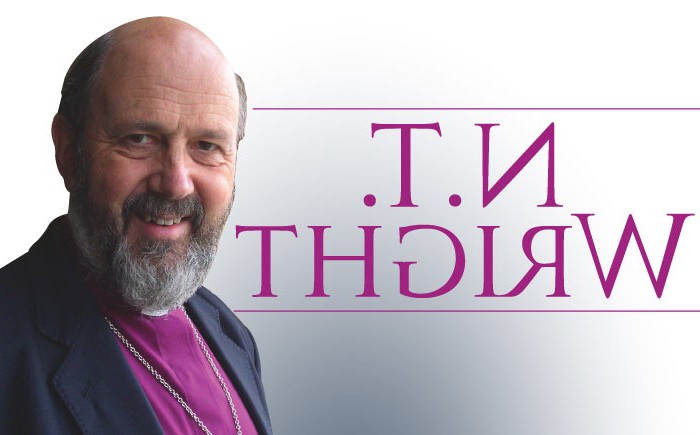
Most recently, Simon Turpin, one of the UK spokespeople for AiG, has aimed his crosshairs at the distinguished Biblical scholar and former Bishop of Durham, N.T. Wright. (Click for AiG article.) Wright has devoted his entire life to the service of the Church and the Academy. Moreover, he is of that all too rare and special breed of scholar who is not only able to write to his academic peers but to translate that work into simpler, more accessible, popular books. Indeed, he helps his reader by using the name N.T. Wright on his more difficult and erudite books and Tom Wright on his more popular works. In addition, he is an incredible public speaker and is among the best preachers I have had the privilege to hear.

Later in this post, I will address Turpin’s misleading portrayal of Wright. For now, it is enough to suggest that even Wright’s “secular” colleagues and critics would be amused to hear him described as compromising and seeking their approval. Indeed, if they read Turpin’s descriptions, they would likely mistake his descriptions as ironic or satirical like when you name an elephant Tiny. Having met Wright myself, I suspect this description would be met with a chuckle. Continue reading “What Motivates Ken Ham? or What Answers in Genesis gets Wrong about N.T. Wright”